

Crescent City beach options range from sandy South Beach beside the harbor to rocky shorelines, coastal overlooks and trail-access beaches south of town. The right stretch for your day depends on whether you want a harborfront walk, roadside viewpoints or a coastal trail leading down to the shore.
- Harborfront: South Beach is a large sandy beach near Crescent City Harbor and Marina.
- Roadside views: Pebble Beach Drive has pull-outs, parking areas and overlooks along a mix of rocky beaches and sandy shores.
- Trail access: Crescent Beach has day-use facilities and a trail connection; Enderts Beach requires a half-mile descent.
- Swimming: Crescent and Enderts beaches are not recommended for swimming because of cold water and hazardous ocean conditions.
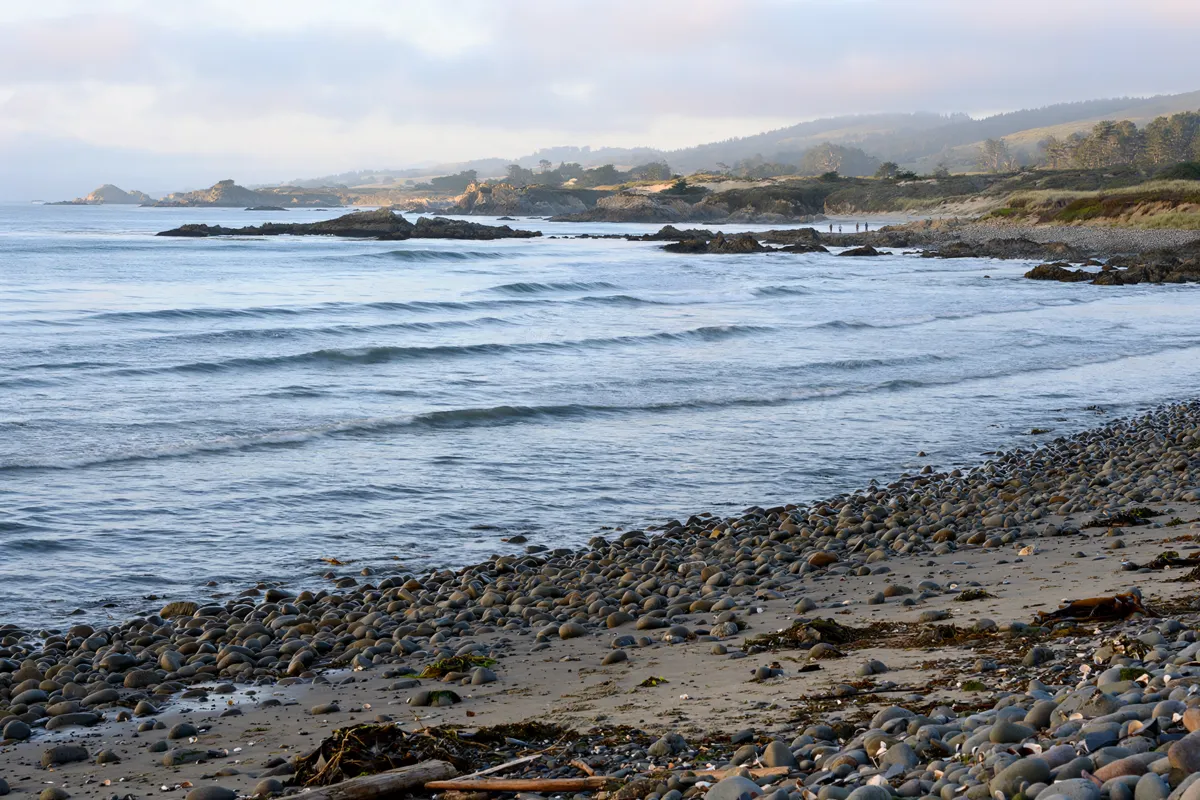
Which Crescent City Beach Fits Your Day
Crescent City’s beaches suit different plans: South Beach offers sandy harborfront, Pebble Beach Drive has a series of viewpoints, and the beaches south of town involve coastal-trail access.
For sand near the harbor, start with South Beach. If you’d rather stop at overlooks and see varied shoreline, follow Pebble Beach Drive. For a longer outing on foot, Crescent Beach and Enderts Beach have access via the California Coastal Trail, but their approaches and facilities differ.
Westward Inn is in Crescent City, and Westward Inn puts the town’s named beaches within reach. If a lighthouse viewpoint is part of your route, Battery Point Lighthouse is visible from the observation point across Pebble Beach Drive.
South Beach and the Harborfront
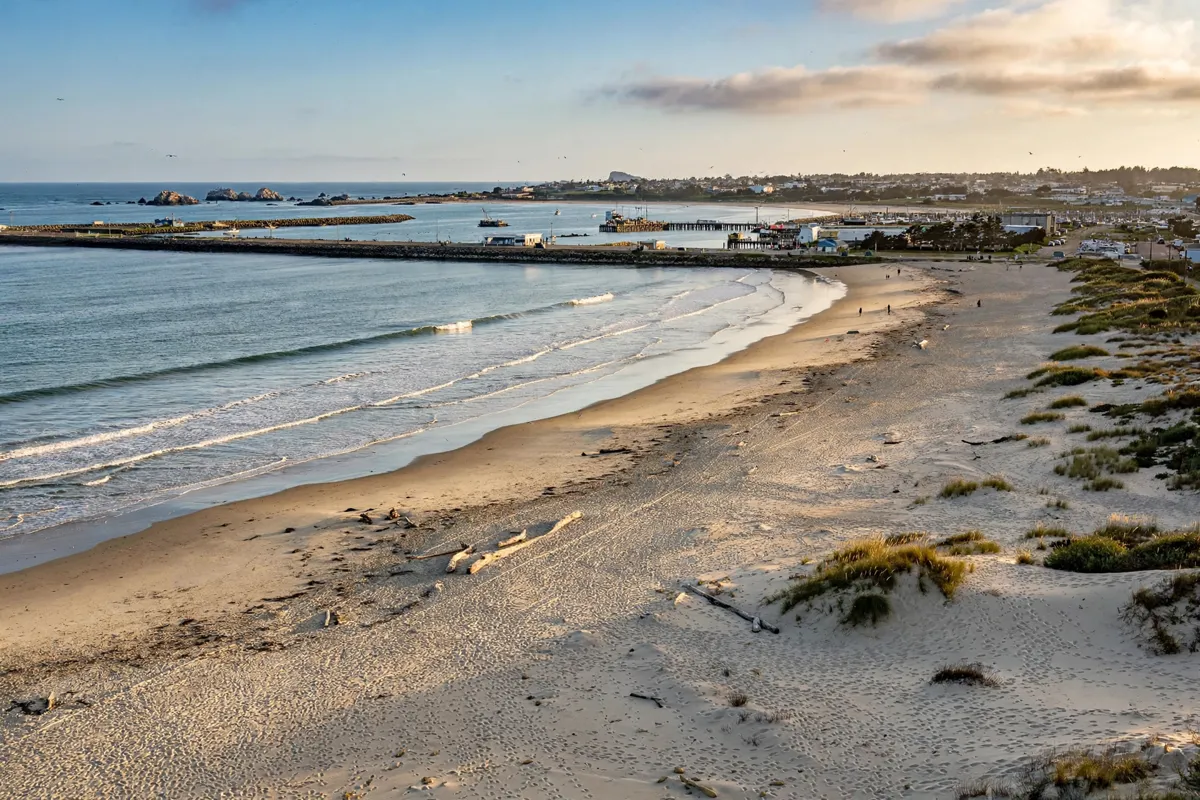
South Beach is a large sandy beach near Crescent City Harbor and Marina, with access points that call for some attention to the approach.
A Harbor District document describes an informal pedestrian path from Anchor Way, where reaching the beach may require climbing over riprap. It also notes that South Beach can be reached from Whaler Island at very low tides. Parking options include formal parking within Redwood National Park and informal parking along Highway 101 outside the Harbor District.
If you’re planning to use the Anchor Way approach, account for the uneven access rather than assuming it is a simple beach entrance. The low-tide route from Whaler Island is another possibility, but it depends on the tide.
Pebble Beach and Crescent Beach
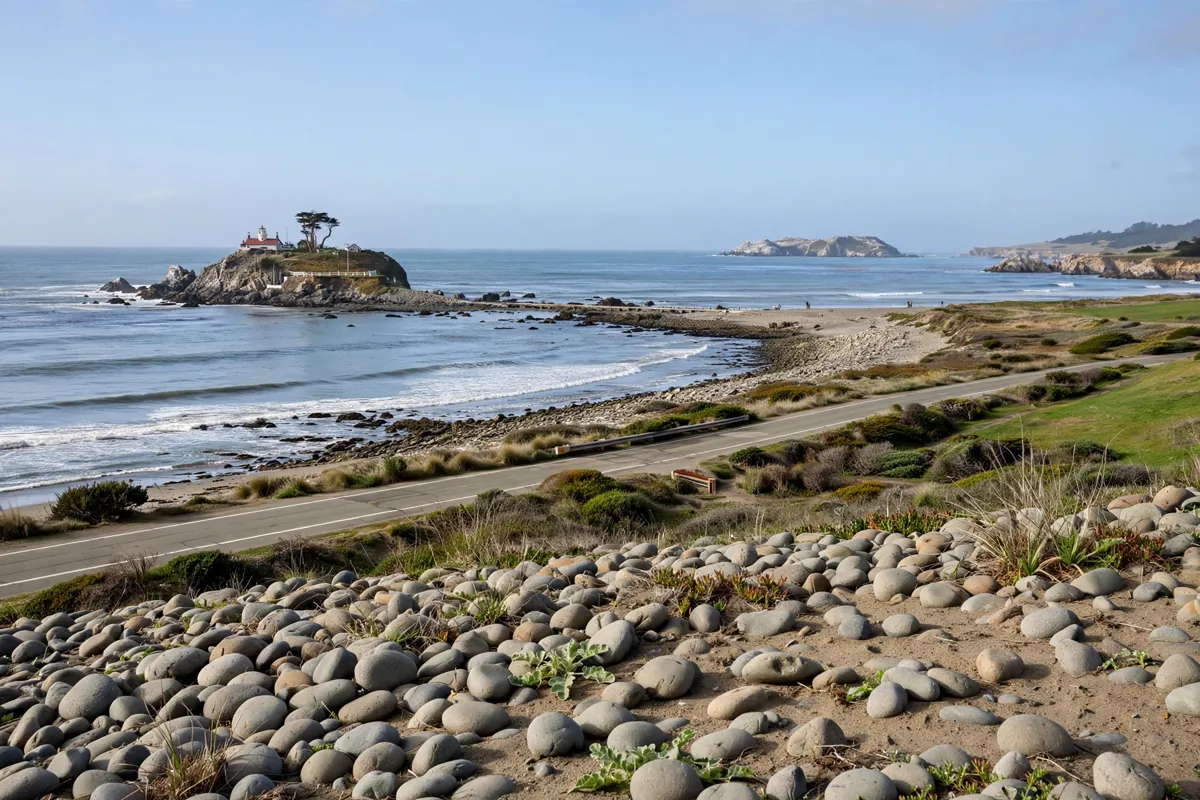
Pebble Beach combines rocky stretches and sandy shores, while Crescent Beach has a day-use area with facilities and access to a coastal trail.
The Pebble Beach shoreline runs from Battery Point Lighthouse to Point St. George. Pull-outs, parking areas and overlooks along Pebble Beach Drive let you take in different coastal views without treating the shore as a single beach entrance.
At Brother Jonathan Park, across Pebble Beach Drive, parking and benches accompany views of Battery Point Lighthouse and Preston Island. The lighthouse is also a focal point of how to visit Battery Point Lighthouse.
Crescent Beach Day Use Area is on Enderts Beach Road south of Crescent City. It has auto and bus/RV parking, picnic tables, a vault/composting toilet, a fire pit, an information kiosk and beach access.
The California Coastal Trail’s Crescent Beach Section connects to the day-use area; reach its trailhead by walking back out of the parking area toward Enderts Beach Road. Beach wheelchairs can be reserved there.
Enderts Beach and Coastal Access
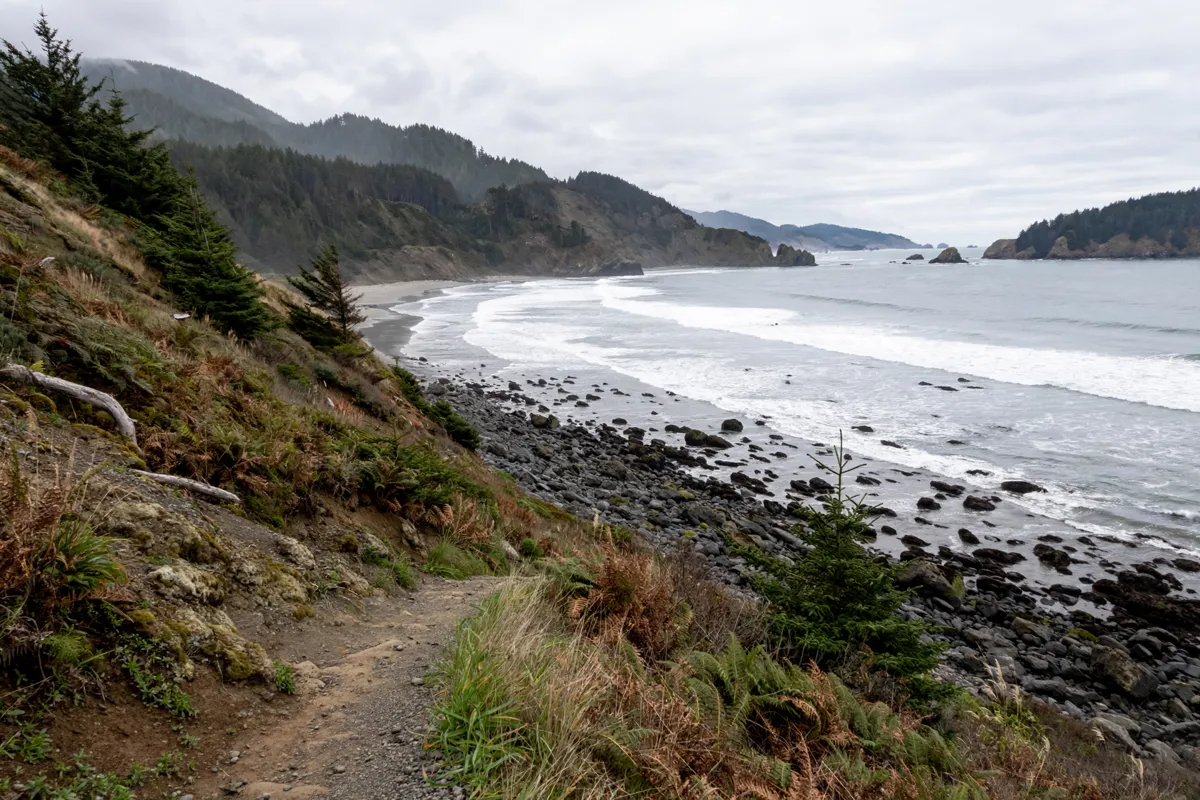
Enderts Beach is three miles south of Crescent City and requires a half-mile descent from the parking area.
Parking is at the south end of Enderts Beach Road, and access to the shore follows the Last Chance Section of the California Coastal Trail. The beach has no facilities; facilities are available only at the parking lot. Dogs are not allowed on the Enderts Beach trail, though service animals are welcome.
The National Park Service describes the tidepool visit as a year-round activity lasting an estimated 60–120 minutes, with no activity fee; entrance fees may apply.
Rock falls sometimes affect or close the first part of the trail, so check the official site before you go. For another coastal outing, you can compare this access with trails and access at Tolowa Dunes State Park.
Beach Conditions and Safety
Crescent Beach and Enderts Beach are not good swimming beaches because cold water and swift currents make conditions hazardous.
At Enderts Beach, the National Park Service also warns about sneaker waves, which have caused drownings on beaches along the redwood coast. Check tide tables before going: low tides offer the best views, but never turn your back on the ocean, even at low tide.
Seasonal weather patterns around town are covered in what Crescent City weather is like by month. The Crescent Beach area does not allow vehicles on the beach, and leashed pets are allowed there.
For waterfront access within town, Beachfront Park has picnic areas, restrooms, a coastal trail and coastal access. Its beach access includes a staircase at Stamps Way and an accessible ramp at Howe Drive West; parking and a picnic area are at Howe Drive East. The City identifies Howe Park as having ADA beach access.
FAQs
Where can you find accessible beach access in Crescent City?
The City identifies ADA beach access at Howe Park. At Beachfront Park, an accessible ramp is at Howe Drive West.
Can you swim at Crescent Beach or Enderts Beach?
The National Park Service advises against swimming at both beaches because the water is cold and currents are swift. Enderts Beach also has a sneaker-wave hazard.
Are dogs allowed at Enderts Beach?
Dogs are not allowed on the Enderts Beach trail. Service animals are welcome.